
15 Legacy Letter Prompts to Capture Family Stories and Values
More and more families are looking beyond financial planning — they’re asking how to pass down the stories, values, and life lessons that shaped them. Legacy letters, sometimes called ethical wills, offer a simple way to start.
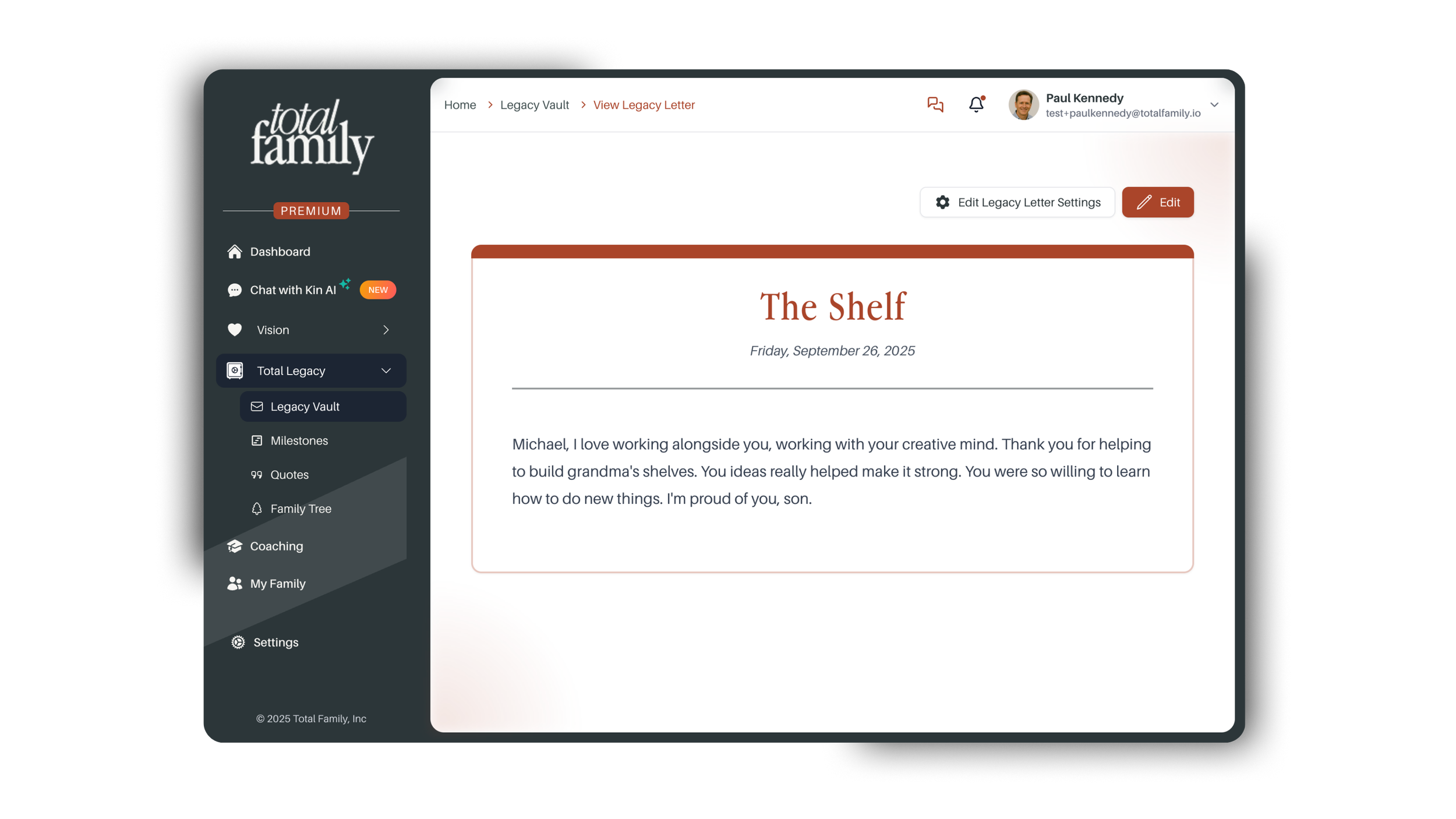
These letters give clients a way to share memories and meaning across generations. For advisors, they open the door to deeper conversations — and with tools like FamilyOS, families can save these letters as part of a broader digital family archive.
Still, writing that first letter can feel daunting. That’s where these 15 questions come in. You can use them with clients to help them reflect, begin, and build momentum.
Why Legacy Letters Are Worth the Effort
According to a survey by Allianz, 77% of people say that passing down life lessons is more important than leaving financial assets. And yet, few families have a consistent way to do it.
Legacy letters are one way to change that. They help families capture the personal side of their story — what we think of as emotional wealth. That might mean stories from childhood, lessons learned the hard way, or hopes for the future.
When stored in a tool like FamilyOS, these letters become part of a family’s broader legacy planning — alongside financial documents, shared values, and vision statements.
How to Help Clients Get Started
Even motivated clients often need help beginning. Here are three things that make the process easier:
1. There’s no perfect time — just a chance to begin.
Waiting for the “right moment” often means it never happens. A short letter written today means more than a perfect one written too late.
2. Write it for someone specific.
Encourage clients to picture one person — a child, a partner, a friend — and write to them directly. It feels more natural than writing for “the future” in general.
3. Make it a shared rhythm.
Some families write letters every Labor Day. Others use birthdays or anniversaries. When it’s part of a routine, the habit sticks. FamilyOS gives them a place to save each letter year after year.
15 Questions to Spark a Legacy Letter
You don’t need to answer them all. Just choose one, set a timer for 20 minutes, and write. That’s enough to get the practice started.
Everyday Moments
What’s one memory from your childhood that always makes you smile?
When you think of our family at its best, what moment comes to mind?
What’s a small ritual that brings you comfort or joy?
What book (or books) do you hope your children or grandchildren will read?
What’s your favorite meal at home? Who makes it? What’s the recipe?
Life Lessons
What failure or setback taught you something you’re glad to know now?
Beyond family, what do you consider one of your greatest accomplishments?
What’s the best advice you ever received?
What’s something you’ve learned about being a good friend?
What would you want your children to know about lasting relationships?
Legacy Anchors
What gives you hope about the future?
How would you like to be remembered?
What have you learned about success or leadership?
What was one of the hardest moments in your life, and how did it change you?
Was there a moment that shaped who you are today?
For Advisors: Helping Clients Take the First Step
Legacy letters aren’t just reflective exercises — they’re part of what makes a family's legacy real. As an advisor, you can be the one who creates the space.
If your clients are using Total Family, they’ve likely already clarified their family vision and values. Writing a letter is the next natural step. You might say:
“You’ve already done the work of defining what matters most. Here’s a way to put it in your own words — just one short letter to get started.”
When that first letter is written and saved in FamilyOS, it sets the tone for what’s possible.
Save and Share in FamilyOS
FamilyOS is more than a platform — it’s where families organize both the practical and the personal. Alongside important documents and decision frameworks, it’s also where families can preserve letters, stories, and reflections.
Each letter becomes part of a digital family archive, easy to revisit and build on over time. Families can tag recipients, link letters to milestones, and keep them all in one secure place.
Encourage your clients to start with just one. It’s a small moment that carries forward.
