
When Legacy Becomes Visible
Legacy work becomes powerful when it enters a family’s daily life.
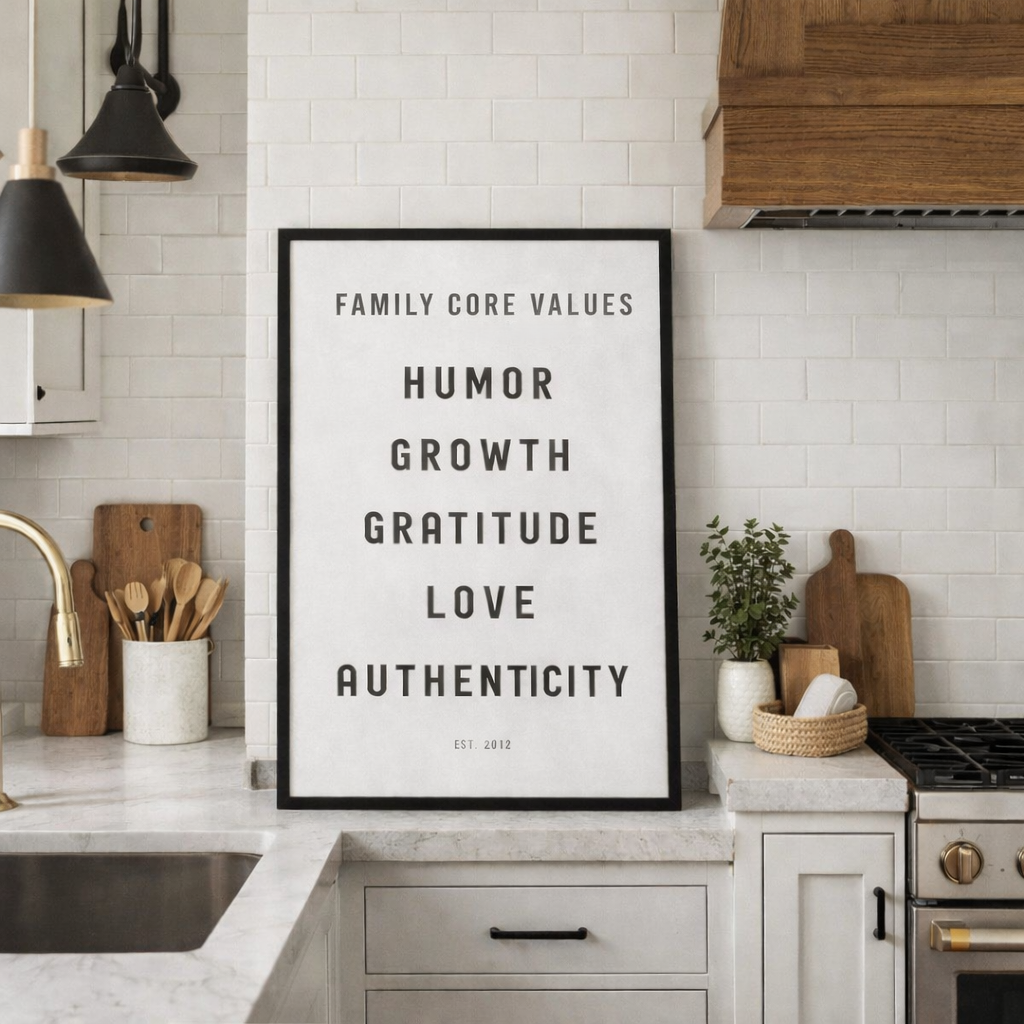
Recently, the oldest friends of a multi-family office’s best client walked into the kitchen of their lake house and noticed something new on the wall.
“I love that sign. Are those your family values?”
“Yes,” the client replied. “It was a gift from our wealth firm.”
That brief exchange captures something essential about how trust, legacy, and long-term relationships are built: when a family’s values become visible, legacy becomes real.
Personalization Makes Legacy Tangible
In Influence, Robert Cialdini describes the principle of reciprocity. Thoughtful, relevant gestures strengthen relationships and create lasting goodwill. Most advisors understand this instinctively.
But personalization takes it a step further. When a gesture reflects a client’s actual Values, Purpose, or Roles, it signals a deeper level of care and understanding. It shows the advisor isn’t just managing money — they’re paying attention to meaning.
One way this comes to life is through custom values boards. After a client defines their Values inside FamilyOS by Total Family, advisors can help them make those values visible in their daily environment.
The execution doesn’t need to be complex. What matters is that it reflects the family authentically. That visible presence — in a kitchen, hallway, or office — serves as a reminder of what matters most.
Why Visible Legacy Matters
Families are constantly transmitting ideas across generations — through stories, routines, expectations, and culture. But too often, these legacies remain unspoken or invisible. That’s where simple visual reminders can be powerful.
When Values are seen regularly, they begin to shape conversations, reinforce identity, and guide decisions. Children and grandchildren start to internalize what their family stands for. Friends ask questions. Guests notice.
Legacy shifts from abstract to concrete.
For Advisors, This Is Not Just a Gesture — It’s Strategy
These visible touchpoints aren’t branded. There’s no logo. No sales pitch. And that’s precisely why they work.
When families see themselves reflected in something meaningful, it creates a lasting impression — not just about the gift, but about the relationship that made it possible. It turns the advisor from a service provider into a trusted presence.
This kind of gesture:
Reinforces emotional inheritance
Supports intergenerational wealth transfer
Strengthens family identity and continuity
Creates natural opportunities for deeper conversations
In other words, it connects the dots between preserving family stories, legacy planning conversations, and the advisor’s role in ongoing support.
What This Looks Like in Practice
After completing a Values module in FamilyOS, advisors can offer clients a tangible way to carry those values forward:
A printed or framed version for the home
A digital screensaver with family values for parents and kids
A shared family document that lives alongside financial and estate plans
Some families choose to share their values during family meetings. Others keep them quietly in view as a private reminder. Either way, the presence of values helps anchor conversations around money, inheritance, parenting, and purpose.
When children ask, “What does that mean?” — parents have an opening. When siblings disagree, shared values offer a reference point. When transitions happen, values provide context.
That’s how simple visibility supports long-term alignment.
This Is What Doing Legacy Better Looks Like
Legacy isn’t always a grand gesture. Often, it’s the small, intentional act that helps a family remember who they are and what they care about.
When advisors offer families a structure like FamilyOS — and then help them bring that structure into everyday life — they’re not just managing wealth. They’re helping clients preserve what spreadsheets can’t.
These acts of reflection and visibility compound over time. They generate trust across generations. They make it easier for families to communicate and stay aligned.
Legacy becomes real when families can point to it.
That’s when it’s no longer an idea — it’s a presence.
And that’s when families start saying, “This is what we stand for.”
