
Financial Capital Came in Last

“My best friend from high school is running a third-generation business in Ohio. She knew my husband was selling his company and sent me a copy of Complete Family Wealth by Jay Hughes.
I asked my advisor about the five forms of family capital. He had never heard of them.
That’s when I knew we needed to explore working with a different firm.”
Source: The Harris Poll
The Big Idea
The Five Forms of Family Capital used to be niche knowledge. Ultra-high-net-worth families. Family offices. A small circle of advisors who went deep.
That’s changing.
As Jay Hughes’ framework becomes more mainstream, advisors who do not understand the five forms of family capital risk being caught flat-footed at exactly the wrong moment.
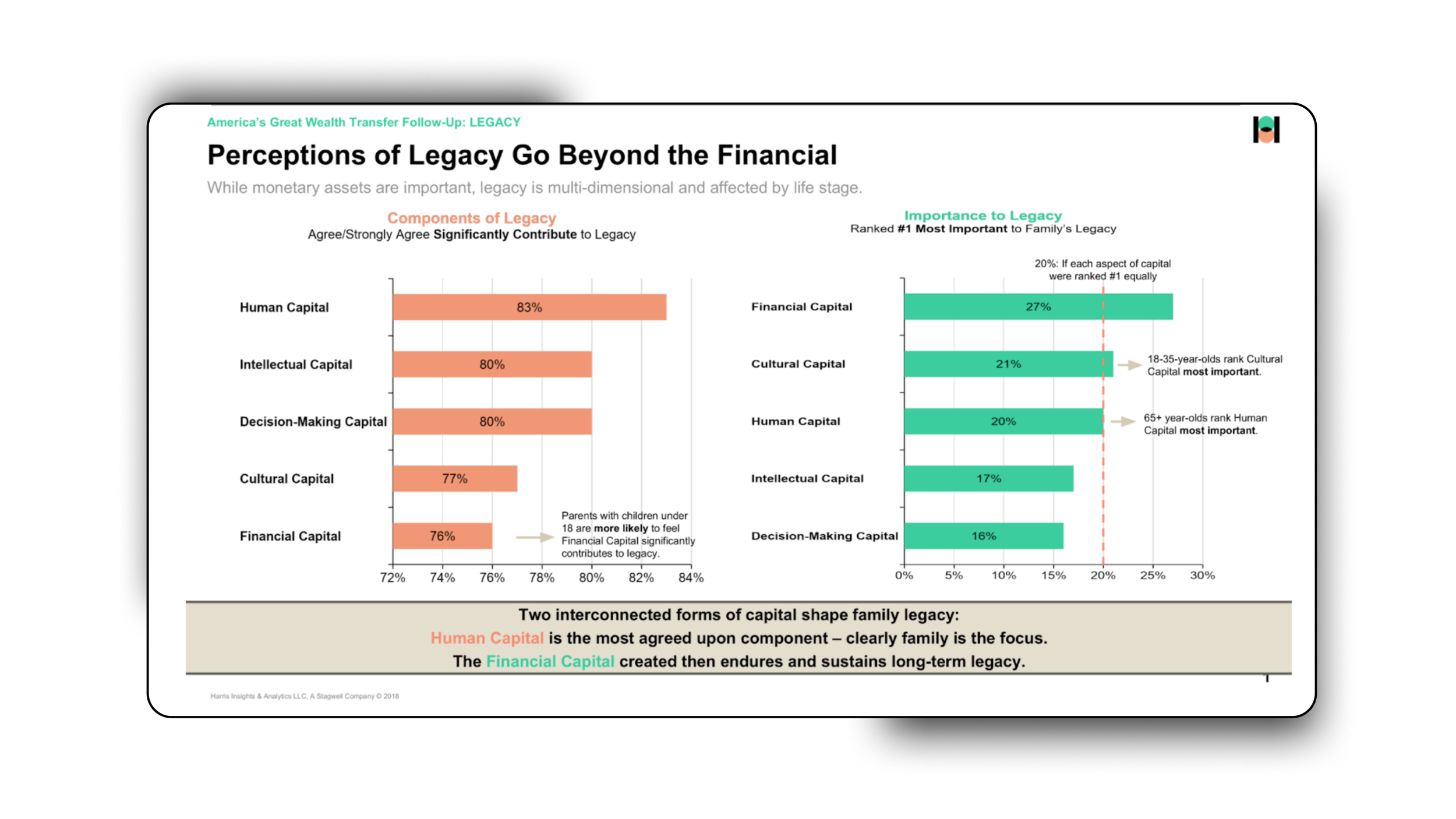
Nothing drives this home more clearly than the legacy survey our friends at Harris Poll conducted with us, reaching more than 2,000 respondents.
When people were asked which of the five forms of family capital most significantly contributes to legacy, financial capital did not come in first.
It came in last.
Fifth out of five.
That does not mean money does not matter. It means families see it as supporting the legacy, not defining it. Advisors who only lead with financial capital are increasingly out of sync with how clients actually think.
Putting it intoPractice
Do not let someone else introduce this idea to your clients.
Be the one.
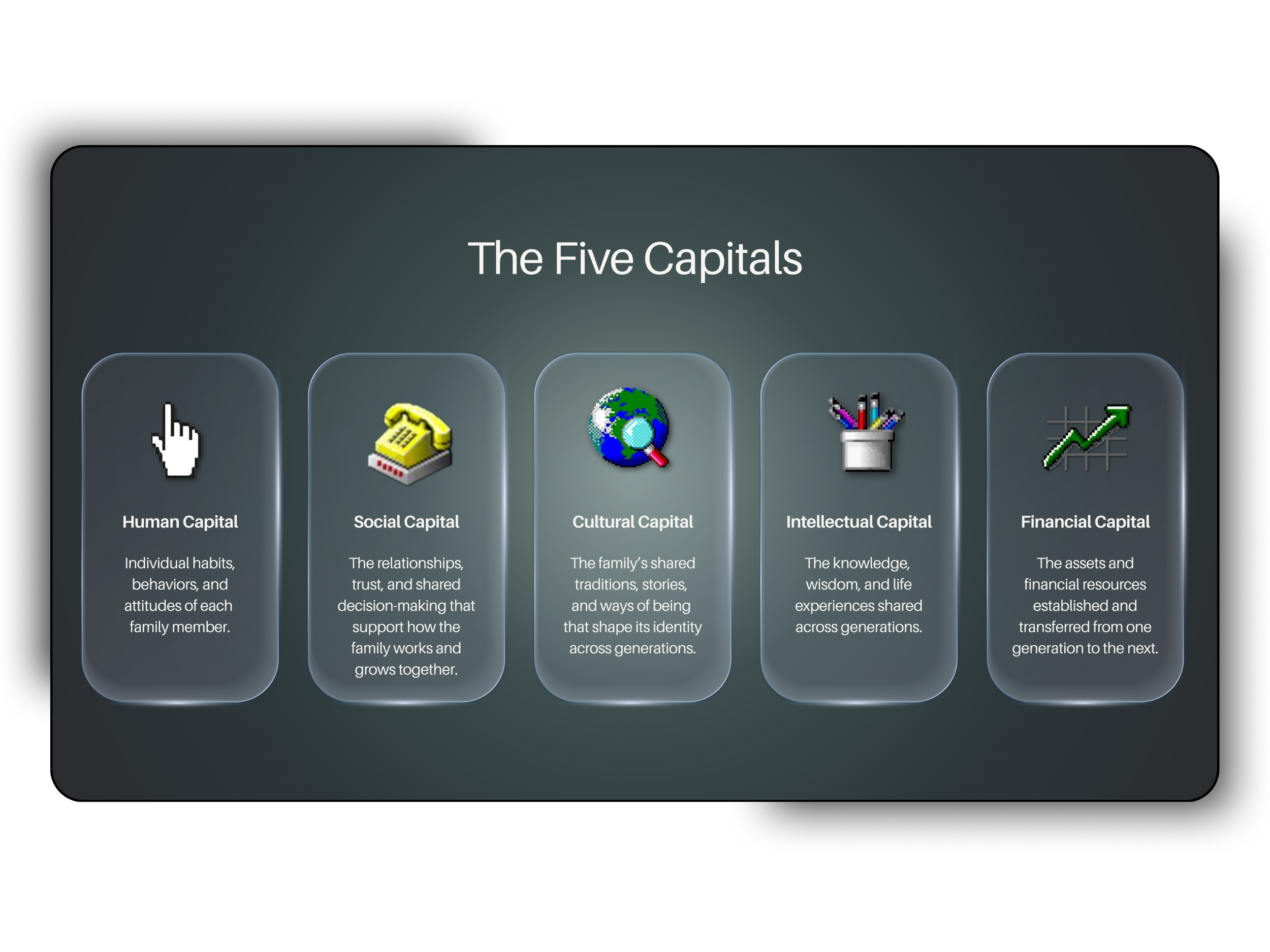
We created a short, plain-English overview of the Five Forms of Family Capital that advisors are using as a simple way to open the legacy conversation. It is not academic. It is practical. And it is easy to share.
This is a powerful question to start with:
“When you think about legacy and the long-term well-being of your family, which of these areas feels most important right now?”
Content Worth Exploring More
We shared a powerful episode of the Visionary Advisor Podcast featuring Jay Hughes, the originator of the Five Forms of Family Capital. In this LinkedIn post, we revisited his conversation and why it’s resonating so strongly with advisors and families alike.
This framework works because it gives families language for things they already care about—but may not know how to articulate.
It’s a clear signal of where client expectations are heading, and why advisors who expand beyond financial capital will have a durable advantage.
The Visionary Advisor Podcast
On The Visionary Advisor Podcast, we explore timeless lessons and real advisor stories. If you're ready to help clients move from technical planning to transformational leadership, tune in.
Industry leader Robert Balentine, co-author of First Generation Wealth, joined us for a powerful conversation about legacy, values, and the human elements that matter most in multi-generational wealth. Listen to the episode
Or catch up on other episodes and subscribe: Subscribe to The Visionary Advisor Podcast
